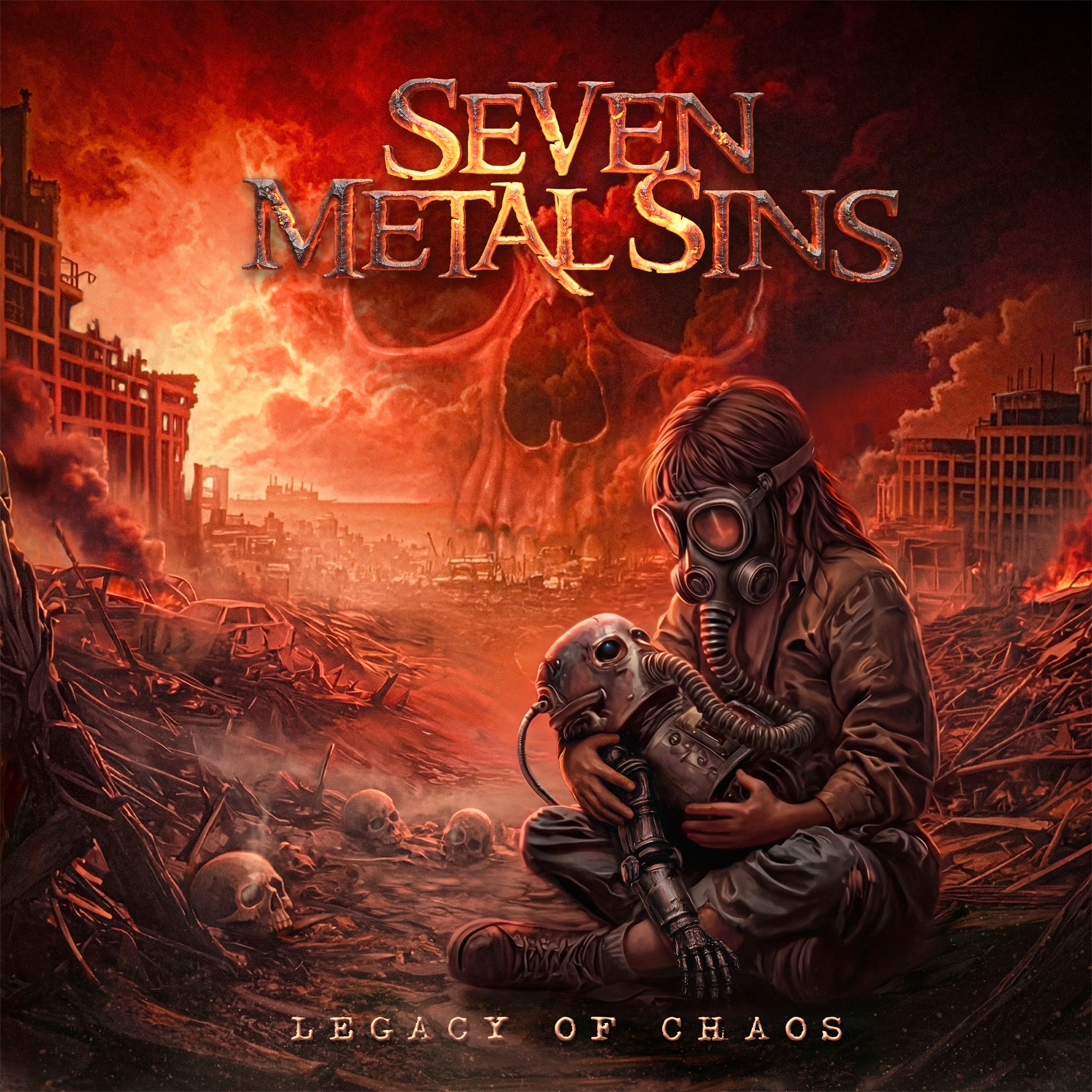
Release date: June 5th, 2026
Label: Rockshots Records

Forged in the spirit of classic heavy metal yet sharpened by the anxieties of the modern world, Seven Metal Sins emerges with a sound that channels the steel of Accept, the power of Primal Fear, the precision of Judas Priest, and the melodic aggression of early Helloween. But beyond the riffs and high-octane energy lies a band deeply connected to the fractures of contemporary society.
Through dystopian landscapes, science fiction imagery, and apocalyptic undertones, Seven Metal Sins confronts themes such as environmental collapse, social unrest, and the rise of authoritarianism, transforming present fears into cinematic heavy metal narratives. Their music balances raw intensity with purpose, combining driving rhythms, razor-sharp guitars, and commanding vocals into a sound that feels both timeless and urgently current.

Review
The Fall is an introductory piece, less than a minute long, built around howling guitars and the sound of static carrying a dramatic “final broadcast” message. What kind of imagery is Seven Metal Sins proposing here, and how do they bring it to life?
Scars of Injustice opens with a solitary electric guitar, rough yet melodic, throwing out a riff that seems to move through smoke and steel. Every note has room to resonate, as if anticipating something massive: from the edge comes sweeping in the second guitar with a fast solo and crushing percussion that marks the territory and drives the track forward through rapid chromatic chords and powerful melodic finishes, while Claw G.’s unleashed, raspy vocals form a titanium lineup that recalls the sharper timbre of Chris Boltendahl from Grave Digger or Hansi Kürsch of Blind Guardian.
Yes, we are facing steroid-loaded heavy metal, unafraid to attack with low-tuned chord progressions and palm-muted passages, spiral-shaped melodic lines seasoned with rapid tapping sections and rhythmic variations hammered down by speed-metal-driven percussion, as heard in No Sanctuary, a song that never lowers the flag and bets on emphatic, melodic choruses while delivering contrapuntal sections where the lead guitar slices through the fast and pounding rhythm guitars, riffs designed purely for headbanging. Between the double bass drumming and the relentless snare attacks, the song accelerates and decelerates with a progressive flair without ever ceasing to sound like dramatic and ultra powerful heavy metal.
Hypocrisy evolves from clean, arpeggiated guitars serving as a brief introduction before entering a frontal assault zone built on fragmented and rapid patterns, followed by lines of power chords reinforced by excellent double-kick work and the firm snare attack of drummer Patrick Soria, a musician with surgical precision and steel arms who never wastes energy on strange flourishes. Instead, he focuses on fueling the sonic machine with precise fills and carefully measured use of the double pedal.
Eternal Downfall is a killing machine: it begins slowly only to explode into blazing thrash-speed riffs, regaining calm in the vocal phrasing before moving into melodic territories filled with hard-edged lines and massive use of lead guitar work and twin attacks. The result is an exquisite combination of strings handled by Frédéric Auclerc and Antton Iriart, both focused on generating synergy rather than empty protagonism. You will never hear a guitar solo overshadowing the rhythmic foundation; on the contrary, everything remains fully cohesive with the band’s overall vision.
Feel The Steel. What a title! And what a song. This new piece is aggressive, moving away from more conventional heavy metal and opting for groove-metal patterns with extensive use of string bending and accented notes within rhythmic breaks. It is a far more modern kind of metal without losing the band’s essence: crushing and thunderous, always incorporating fractures within its rhythmic structures.
A song with a strong pop soul without abandoning the steel of metal is Wolves of the Last Dawn, because Seven Metal Sins has clearly set out to create an album capable of combining the best of tradition with more modern metal elements without ending up like a Frankenstein whistling in a graveyard. This track never abandons its pounding rhythm or conventional heavy-metal vibe, featuring strong solo interplay and excellent wolf howls from Claw G., who truly honors his name: absolute and definitive claw of metal.
Beyond The Breaking Point is another ambush: a fast opening that shifts down during the first verses. The song fully transmits that sense of power and determination. Stéphane Lacoude’s work on the four strings is solid and forceful. It is true that most of the time he aligns himself with the rhythm guitars and his primary role is to add weight to the low frequencies, but the bass remains distinguishable beneath the walls of distortion, which would sound empty without his contribution.
Seven Metal Sins has composed a long-form album, and there are still three more tracks left to enjoy. Sun Eaters repeats a structure similar to other compositions: a melodic string introduction before launching at full speed, very much in line with contemporary Judas Priest, introducing small rhythmic breaks shattered by bursts of palm-muted lines followed by open and spacious power chords. The guitar solos continue following the same philosophy of never overshadowing the rest, elegantly merging with the rhythm section and preventing the spotlight from falling too heavily on any single member of the band: everyone moves in unison toward the same goal.
King of Sorrow is a power ballad with a slow and heavy development. It begins with clean guitars and melodic lines that slowly distort while maintaining a simple structure based on fifth-chord progressions evolving from slow cadences into more dramatic territories. The vocal lines take center stage here, dramatic and expressive, moving through a wide variety of tonalities with vibratos full of body and harmony. It is a simple composition, yet one that still offers considerable rhythmic variety and small contrapuntal sections.
Rise of The Phoenix is the final stop of this long journey. An introductory synthesizer quickly merges with melodic lead-guitar notes. It is the album’s most “power metal” song, but in the sense of classic power metal that emphasized thunderous rhythm work, speed, and the forcefulness of guitar phrasing, with solos ranging from rapid virtuosity to melodic arrangements. It closes this solid and crushing album with a golden finish.
Conclusion
Balance is the word that defines this work. It is capable of integrating elements of progressive metal, power metal, and even hard rock without ever losing its identity. The musicians possess more than enough talent to shine individually, yet they have chosen synergy and musical amalgamation over running with their own separate colors, and that elevates them even further. The band understands perfectly how to balance melody and aggression, how to move from walls of blazing riffs into heavier and more epic sections without losing cohesion or identity. And that is perhaps the album’s greatest strength: it never sounds like a collage of influences forced together. On the contrary, everything moves forward under the same logic of steel and dynamite.
TheNwothm Score: 10 /10
Links
Facebook: https://www.facebook.com/sevenmetalsins
Instagram: https://www.instagram.com/seven_metal_sins.official/
Label: https://rockshots.eu


