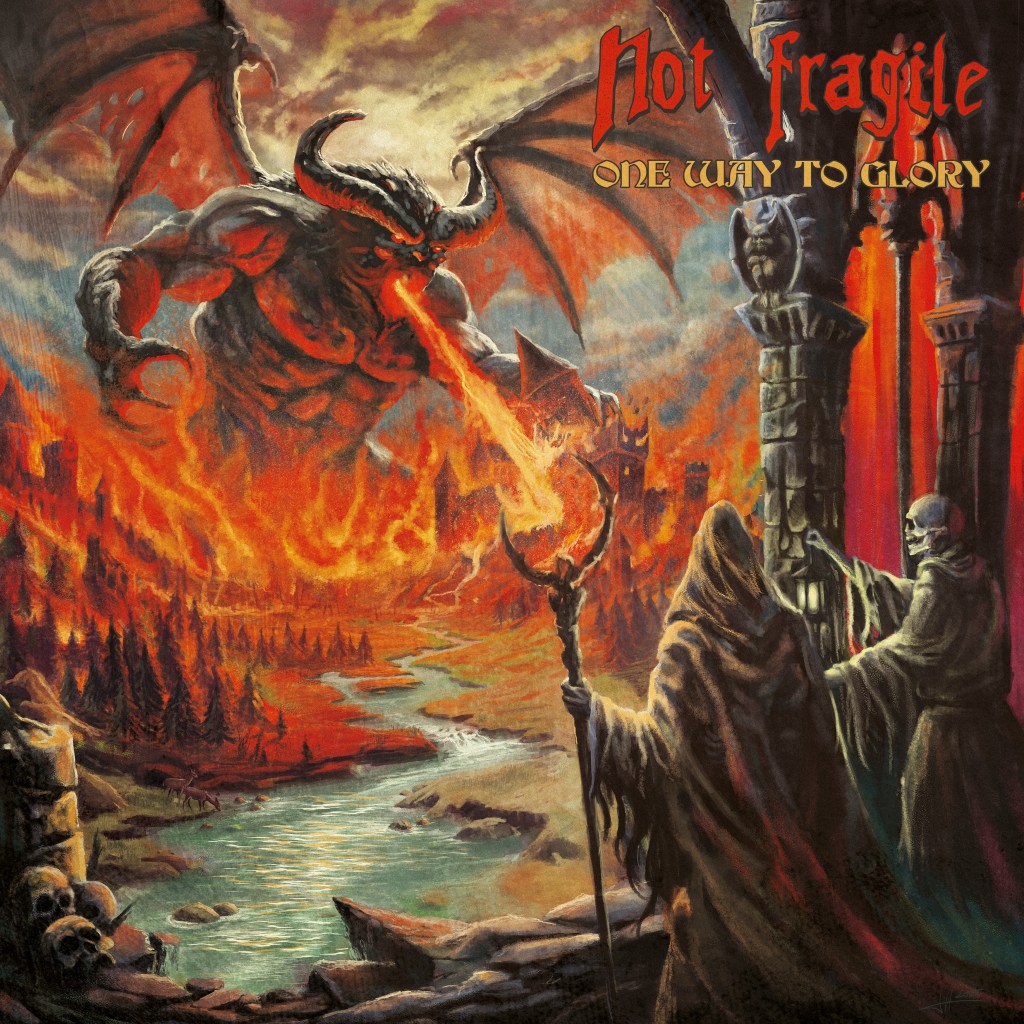
Release date: Out Now!
Label: Relics from the Crypt

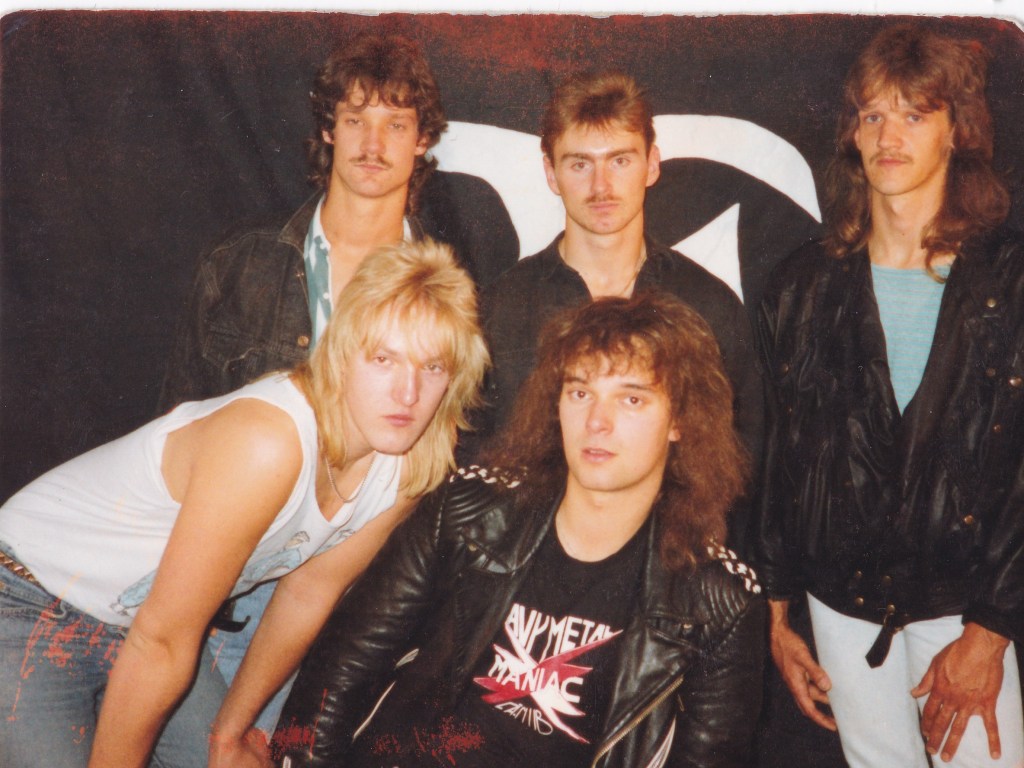
NOT FRAGILE is one of the most singular stories in German heavy metal: a band formed in 1980 that, despite releasing demos, an EP, and a powerful mini-album, saw their full-length debut relegated to confusing and posthumous editions. Their blend of speed and power metal—raw, fast, and fueled by the energy of the era, eventually turned them into a cult name. Now, thanks to the archaeological work of Relics From the Crypt, the classic era of NOT FRAGILE comes back to life with the remastered reissues of Who Dares Wins (1988) and One Way to Glory, reclaiming the medieval, electric, and battle-hardened spirit of a band that always deserved far greater recognition.

Review
One Way To Glory is, in essence, the distilled concept of metal’s epic spirit: going out to battle and facing the enemy head-on. NOT FRAGILE adopts this as both a motto and a starting point for the album. What we hear is a classically crafted record, literally, because it’s a remastered rescue of a distant 1989 release that moves nimbly across the borders of power, speed, and heavy metal.
What do we have here? A solid rhythmic foundation, with drums and bass locked tightly through the double kick; expressive guitars that, without overcomplicating their structure, alternate bursts of speed with sturdy power chords. The vocals might be a weak spot—not because Torsten Buczko (also on guitar) is a bad singer, but because the epic weight of power metal relies heavily on a virtuosic voice. Buczko delivers just the minimum: slightly raspy highs that strongly recall Walls of Jericho-era Helloween, betting on strength and leaving aside the intricacies of technique. But this is relative, because as we’ll see, there are other tracks where his performance lands better.
This becomes clear on Hard to Be Alive: the high notes are well-placed, but lack body and often feel flat. Even so, we’re dealing with a seasoned band that knows how to craft powerful songs, with inspired choruses and simple, effective structures, something heard clearly in the third track, Wanted, built on spiraling riffs, excellent bass lines, and a fast rhythm section interspersed with syncopated breaks.
In general terms, the lead guitar doesn’t attack with blazing scales; instead, it focuses on shaping the melody and reinforcing the rhythmic bed, leaning toward quick notations and tight tempo control rather than uncontrolled destruction. Too Fast might be the track with the best opening on the album: choppy, rapid-fire riffs, pounding percussion, and a decidedly speed-metal structure with repeated chords and choruses shouted at full force.
As for Seven Guns for Hire, we can say it’s perfectly placed as the fifth track: an overload of pure speed would have plunged the record into monotony. Instead of opting for a ballad, here we get a mid-tempo song with a much more interesting vocal development. There’s a noticeably stronger command of phrasing, with more openness toward aggression and raw shouting, proof that, more often than not, what a singer needs to shine fully is solid musical direction. And here, that goal is only halfway achieved.
Clairvoyant brings in excellent chords with artificial harmonics that immediately recall early Van Halen and Judas Priest’s eighties era. The technique is used repetitively, building melodic layers that fit perfectly over the rhythmic work. While the drums stay strictly functional and never step outside the margins, the bass lines offer excellent fills. The vocals also improve here, the monotony drops, giving way to more expressiveness, with a voice that shifts between high notes and a raspier, more aggressive tone. However, there’s an interlude with what sounds like synthesized backing vocals, and that breaks the musical magic. Even so, it remains an excellent entry point to decide whether or not to dive into the full album.
Welcome You the Crowd carries that same force we can recognize from some of their fellow countrymen—think Battalions of Fear-era Blind Guardian, with strong interplay between speed and harmony, inspired and epic choruses, and screams that could even rival those of the great Ronnie James Dio. It’s another outstanding option to hear the band at their best: powerful, forceful, with excellent guitar interludes, and arguably the crown jewel of the entire record.
Both Lost in a Dream and Full Moon Rising are straightforward, no-frills songs with a solid percussive attack. Listening to them in sequence, you can feel a bit of fatigue due to repeated structures, but they keep their momentum thanks to good gear changes, even though the guitar solos remain the weakest point of the album as a whole, feeling more like a ritual that has to be fulfilled. Full Moon does surprise at the end with some bold bass lines closing the final minutes, and that deviation from the formula is precisely what you end up missing in the rest of the tracks.
W.I.R. clearly expresses what I mean about bringing the bass further into the composition. It’s a fast track, without major changes, and with a better use of the lead guitars, never excellent, but melodic enough, working very well as the closing number of the album’s final stretch.
Near the end comes the album’s longest title, To Hunt and To Be Hunted, stretching past the six-minute mark. Despite its length, it doesn’t introduce much new to what we’ve already heard, at least not until the halfway point, where the bass and cymbals take the lead alongside a whispered, mysterious vocal line, creating a brief atmosphere that soon breaks under a renewed charge.
The Evil One is the farewell. A track that goes straight for speed, introducing some interesting breaks into the main riff. Compositionally, it doesn’t add much if you’ve heard the entire album, but the guitar melodies are clearly built to summon that feeling of triumph and majesty, like the rush one gets in a role-playing game while reaching the final battle. A strong ending.
Conclusion
NOT FRAGILE’s style is direct, almost untouched except for a solid mix and powerful guitars. In the analysis we’ve compared them to early Helloween and Blind Guardian—comparisons that could easily extend to Manowar, Jag Panzer, or Running Wild. And here a clarification is crucial: we’re dealing with old material that, at the time, had to contend with those bands in terms of originality. So it’s not entirely an influence—it’s metal recorded with the pure spirit of that era.
TheNwothm Score: 8/10
Links
Bandcamp: https://dyingvictimsproductions.bandcamp.com/album/one-way-to-glory
Label: Relics from the Crypt
 The Nwothm
Leave a comment