
Release date: Out now!
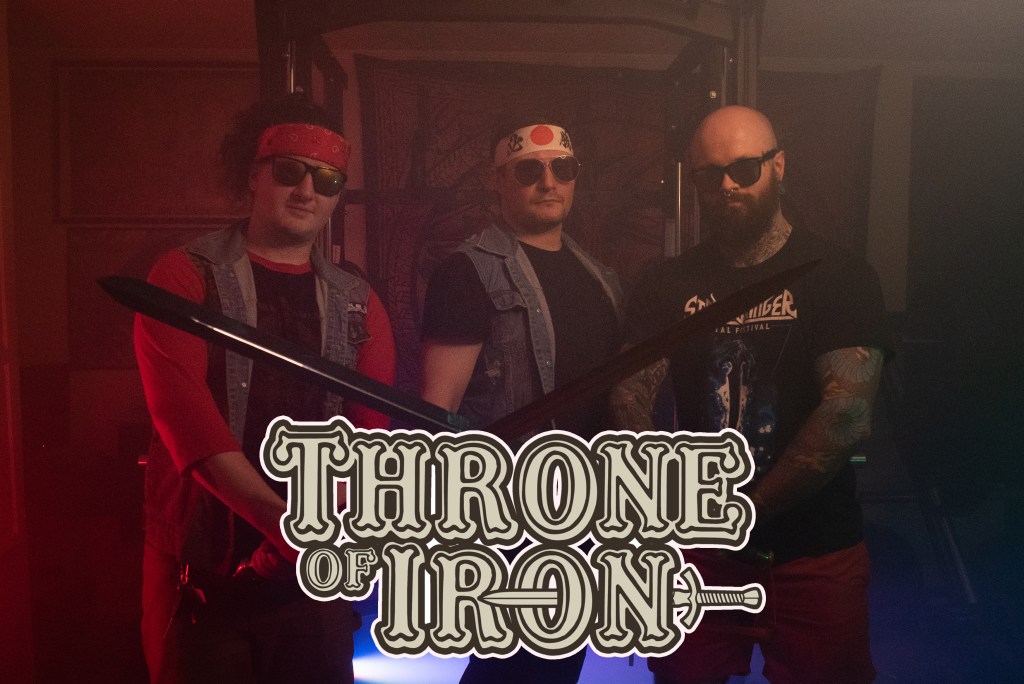
Iron Throne describe themselves as “Dungeon crawling heavy metal from a wood-paneled basement in Indiana,” and as the reader might guess, besides guitars, bass and drums, these guys also roll the dice like in the best-selling, most famous game of all time. Did they roll a 20 and land a critical hit? Let’s find out.
Review
Denied: Powerful opening chords and twin guitars set the tone with a sense of grandeur. After the solemn start, the main riff unfolds across the left and right channels—a classic trick that’s rarely used nowadays, once employed by bands as different as Slayer, Thin Lizzy, or Wishbone Ash. Tucker Thomasson’s vocals are raw, with limited range, sticking to slightly raspy mid-tones. The high-pitched twin guitar harmonies mimic violins and, combined with the bass-drum backbone, evoke the classic ’80s feel of bands like Manilla Road, Riot, or Omen. Excellent drumming, smartly alternating tom and snare hits with restrained double bass work. A strong opener.
The Oath: A deep rhythm section lays the groundwork for the lead guitar’s higher notes. Palm-muted riffs and the bass lines give the track a solid foundation. Vocals, however, show some weaknesses. Tucker’s phrasing is serviceable, though not technically refined, but in the choruses he sounds uninspired—sometimes even off-key—dampening the impact. The solo section is repeated in the second half, featuring rudimentary licks that fit the song’s epic structure. A fast-paced black metal-style outro saves the track from monotony.
Divine Smite: This track leans into open chords and syncopated rhythms, adding galloping sections during the most epic moments. The bass is more prominent, adding weight to the sound. Vocals are less flat here, leaning into deeper and raspier tones. The lead guitar plays note by note over a fast rhythm section, creating subtle atmospheric touches. The drummer shines in the final section, speeding things up without losing control. One of the album’s top three songs.
The First Loss: Opens with slow, clean, reverberated guitars in a Pink Floyd-like style, accompanied by background battlefield screams. This short piece serves as an intro for the next track.
The Final Rage: A song built on fast riffs, rapid palm-muting, and small rhythmic shifts. Pull-offs and fretboard slides stand out. The percussion is solid, ending with tight blast beats that wrap the track up convincingly. Among the best on the album. Upon a Bloody Shore: The vocalist attempts higher stadium-style chants here. His register isn’t bad, but could improve with more expressive phrasing. Structurally: short intro, verse, chorus, verse. The lead guitar offers melodic passages backed by a heavy, fast rhythm section. The final solo gets the job done but lacks new ideas compared to earlier tracks. It needs more risk and experimentation.
Detect Evil: Opens with a tapping-heavy solo that, while not masterful, adds welcome variety. The verses sound more developed, but again, the chorus falls short—uninspired and slightly off-key. Between high-speed moments, there are brief mid-tempo intervals that help keep things dynamic. Around the midpoint, there’s a thrashy scream and some high notes—well executed, but underused. These touches could’ve given the song more character.
The City of Brass: Starts with speed metal-style drums and syncopated rhythms, then shifts into mid-paced territory. Vocals show some improvement, with a vibe reminiscent of Viking metal. The song feels combative—open chords, sustained chorus notes, and a marching drum pattern executed brilliantly. Twin guitars create strong harmonies and hymn-like sections. The album’s second-best track.
The Holy Fire of St. Djezzagh: A clear step up in vocal performance. This classic-speed-metal piece surprises with punchy drums full of groove and tasteful fills. Riffs are catchy, featuring elegant pinch harmonics. The guitar solo is old-school, with rhythmic backing full of hooks and well-executed choruses. The album’s highlight. 9 out of 10.
Altar of Ukim Conflagration: A 39-second interlude that sets a dramatic atmosphere with cavernous synths reminiscent of classic dungeon synth artists like Cernunnos Woods or Pazuzu.
The Ninth Level: Starts slow and melodic, then kicks into high gear. The alternating fast and mid-tempo sections between verses keep the pace interesting. The guitar solo is solid—not overly technical or unique. Bass guides the drums effectively, and the drummer excels at switching between traditional 4/4 and well-measured double bass work, never overused.
Conclusion
As we know, the voice is an instrument too—and in this case, it needs more work. It’s only in the final track where the vocals sound more refined, evoking classic German power metal singers like Chris Boltendahl (Grave Digger) or Hansi Kürsch (Blind Guardian), known for their deep and mid-ranged vocal dominance. The bass does its job but could use more presence. The guitars generally sound strong, with compositions reminiscent of early Running Wild—melodic and traditionally heavy. The drummer stands out as the band’s most skilled member, clearly on the right path. Adventure Two is a solid, well-mixed effort with a strong musical foundation, though future work should pay closer attention to vocal development—which we’re confident will improve in time.
TheNwothm Score: 6.5/10
Links
Bandcamp:https://throneofiron.bandcamp.com/
Facebook:https://www.facebook.com/throneofiron
Instagram:https://www.instagram.com/throneofironmetal
Label:https://www.noremorse.gr
 The Nwothm
Leave a comment